Sunday, March 28, 2010

The Boxcar Children Graphic Novels: Blue Bay Mystery


Title: The Boxcar Children Graphic Novels: Blue Bay Mystery
Author (Created by): Gertude Chandler Warner
Illustrator: Mike Dubisch
Genre: Graphic Novel (popular fiction)

Summary
The graphic novel Blue Bay Mystery is an adaptation of Gertrude Chandler Warner’s 1940’s series “The Boxcar Children.” At the beginning of Blue Bay Mystery, Henry, Jessie, Violet, and Benny’s wealthy grandfather arranges to take them on a trip to a deserted South Seas Island. Lars, a sailor and the children’s old friend Mike Wood also came along for the adventure. Lars, was Grandfather’s friend who had once been stranded on this exotic island once before.
After a safe trip to the island, the Alden kids had fun swimming, hiking, catching food, and just exploring the island. Everything was fun and games until the kids found a shipwrecked boat on the island. If that was not enough, they also found a myna bird with some cryptic messages. After finding the shipwrecked boat and the myna bird, the kids started to wonder whether this island was really deserted after all. The kids kept on finding more and more clues that made them think that there was another person on the island. One day, the kids decided to climb up the mountain, Henry went up first and then everyone else followed. The kids discovered a random stump up on the mountain that had to have been placed there by someone. Henry stood up on the stump and looked into the cave. The cave looked just like the old boxcar they had lived in before and it even had a pink cup like his in it. This was a big clue that someone was on the island. Benny then decided he was going to climb back down the mountain. When he got back down to the ground, he saw something moving in the trees and he decided to follow it. All of a sudden the ground collapsed and Benny fell down into a trap. He looked up from the bottom of the hole to see if anyone was there to help him, to his surprise he saw a young boy waiting there to help him out. The young boy introduced himself as Peter. He explained everything to the children of how his ship went down, why he did not call out to them, and that he had missed his family and wanted to go home to them. After Peter finished his story, the kids helped him clean up, gave him a haircut, new cloths, and some food to eat. Grandfather then talked to Peter and told him that they would do their best to find his parents, but if they could not find his parents he was welcomed to live with them. While on their way back to San Francisco, Grandfather received a message that Peter’s parents were alive and that they would pick him up in San Francisco. After dropping Peter off in San Francisco, the Aldens and Mike flew home. Another adventure had gone by, and the Aldens’ had solved another mystery.

Classroom Connection
Graphic novels often attract kids and motivate them to read. One way teachers could use graphic novels in the classroom is to help students understand how to use context clues to improve their reading. The pictures provide context clues that help students understand the meaning of the written text. If students are having trouble with a word or just comprehending the sentence in general, they can look at the pictures and start to get an idea of what the narrative could actually be about. When children begin to understand the narrative, they are more likely to continue reading and possibly begin to enjoy reading.

Tuesday, March 23, 2010

Title: The Princess and the Pea
Author: Hans Christian Andersen
Illustrator: Edmund Dulac
Genre: Folktale

Summary
The “Princess and the Pea” is about a prince who wanted a princess, but she had to be a “real” Princess. He traveled around the world looking for one, but something always seemed wrong. He had a hard time determining whether they were real or not. Since he did not find a princess, he returned home. One night during a bad storm, the King heard a knock at the door. Standing there was a princess. She said she was a real princess, but her appearance seemed to tell another story. The King invited the princess in and told the Queen about her. The Queen decided to test whether this young lady was a real princess or not. She went into the bedroom, took all the bedding off and placed a pea in the very middle of the bottom mattress. Next, the Queen took twenty mattresses and laid them on the pea. Lastly, the Queen laid twenty quilts on top of the mattresses. This was where the princess was to sleep that night. In the morning, the princess was asked how she slept, she responded by saying “Oh terribly badly” and told them that she had been lying on something hard that made her extremely uncomfortable. By this time, the Royal family knew she was a “real” princess because nobody but a real princess could be so sensitive. The prince took her for his wife and the pea was put in an Art Museum where it still remains today.

Classroom Connection
Folktales are very interesting and fun to use in the classroom. There are many different variations of each folktale, which makes it interesting to study. Students could choose three variations of the Princess and the Pea and make comparisons among the three texts. They could complete a chart to organize their thoughts. After students had enough time to complete the chart on their own, they could then share what they learned with others, which would lead to a productive group discussion.

Skinnybones


Title: Skinnybones
Author: Barbara Park
Genre: Fiction (chapter book)

Summary
Skinnybones” has two main characters, Alex Frankovitch and T.J. Stoner. Alex Frankovitch is a fifth-grade student who is very short and skinny for his age. T.J. Stoner is also a fifth-grade student, but he is much taller and stronger than Alex is and is considered the best little league pitcher in the whole town. Alex and T.J. do not get along very well because T.J. brags a lot and bullies Alex. However, one thing the two of them do have in common is the fact that they both play little league baseball. In the story, Alex has a big mouth that often gets him in trouble. One day Alex brags and claims that he is an excellent pitcher and is able to throw a curve ball. T.J. overhears him bragging and challenges Alex to a pitching contest. Needless to say, Alex found himself in a predicament he could not get himself out of. During the contest, both T.J. and Alex pitch ten balls. T.J’s ten pitches were all perfect strikes. Alex’s however, barely hit the plate. Alex was embarrassed, but what made things worse was that the following weekend Alex and T.J’s team’s were competing against one another in a little league game. Unfortunately for Alex, T.J. decided to make an announcement to everyone in the class about coming out to watch the game. During the morning of the game, Alex tried to act like he was sick, but his parents did not believe him. Once Alex showed up at the game he saw a bunch of people in the stands as well as a cameraman. The cameraman was there to watch and record T.J, because if his team won this game, it would be 125 wins in a row for him, which is a new Guinness World Record. During the game, T.J. struck out person after person, but Alex was determined to get on base. Alex bunted the ball and it went short of first base. Alex started running as fast as he could, however, he saw one of the player’s toss the ball to T.J. who was covering first base. In order to distract him, Alex shouted “booga, booga” and successfully got on base, but the umpire declared him out because he believed Alex interfered with the play. T.J’s team ended up winning the game and T.J. became a hero. The first day back to school was horrible for Alex because everyone came up to him and kept saying “booga, booga.” Alex was very embarrassed, but the next thing he knew, he heard his name on the announcements. Alex was congratulated for winning the Kitty Fritters essay contest he had entered as a joke at the beginning of the novel. He was going to be on National television on a Kitty Fritter commercial. Finally, something had gone right for Alex Frankovitch.

Classroom Connection
“Skinnybones” is a very humorous and entertaining book. Barbara Park is able to keep the reader fully engaged and interested in the story. This book could be used in a variety of ways. It could be used as a read-aloud, with a follow-up discussion about bullying, friendships, or perseverance. It could also be a good book to use during Guided Reading because the chapters are fairly short, the text gives an ample amount of opportunities to orchestrate discussion, and there are some challenging vocabulary words that could be taught while reading the text.

Monday, March 22, 2010

The Librarian from the Black Lagoon


Title: The Librarian from the Black Lagoon
Author: Mike Thaler
Illustrator: Jared Lee
Genre: Fiction

Summary
The Librarian from the Black Lagoon is about students in one class who have a fear of going to the library because of all the scary things they have heard from others about the librarian. They imagine a variety of horrible things, such as thinking the librarian will laminate you if you talk in the library or that you are only allowed to stay in the library as long as you can hold your breath. The story goes on and on about the scary things the librarian is known to do, however, at the end of the story, the class walks towards the library and they see all the welcoming signs, instead of the strict and scary ones they were expecting to see. Once they sit down in the library, Mrs. Beamster, the librarian comes over to the table and sets down a stack of books she had already personally selected for each student to read. The students realize that they library and Mrs. Beamster are the opposite of what they had imagined. The library is a very nice, welcoming, and comfortable place to visit, not the horrible, scary place they had previously heard from others.

Classroom Connection
Although this book is fairly simple to read, it portrays a good lesson about fear. This would be a good book to read aloud to the class during the first week of school. The first week of school is usually scary because most people do not know what to expect and this book would give the students and teachers a glimpse of hope for the upcoming year.

Friday, March 19, 2010

The Ugly Duckling


Title: The Ugly Duckling
Adapted and illustrated by: Jerry Pinkney
Genre: Folktale

Summary
The book begins in the summer with a duck sitting on six eggs. Five of the eggs were small, but the other one was oddly shaped and much larger than the other eggs. A few days later the duck saw tiny cracks on the eggs so she sat on the nest and did not move the rest of the night. Before the next morning, the five eggs were empty and five chicks were staring up at her. She wondered why the sixth egg had not hatched yet. A few days later the egg cracked open and the mother saw that the duckling had a long neck and was very dull in color. Everyone thought he was ugly and as time went on things began to get worse for the little duckling. He was constantly being chased by all the ducks, even his own brothers and sisters. One night he decided he had had enough and ran away. He finds a home with an old woman, however her cat and hen tease him so much that he decides to set off on his own once again. He sees a flock of migrating birds and is excited, but he cannot join them. Winter comes and a farmer finds him stuck in a frozen pond and decides to take him home, however the farmer’s children scare him and he decides to leave the house. The rest of the winter months were horrible for the duckling, it was cold and he never had enough food, but finally spring came. He saw a flock of the beautiful birds he had seen in the sky during previous months before and he decided to follow them. The duckling stretched out his wings and lifted himself into the air to fly down to the water. After he reached the water, the other birds swam to meet him. He was confused why they had come to welcome him since he was so ugly, but then he looked into the water and saw a reflection of himself in the water. Right in front of his face he saw the beautiful swan he had turned into.

Classroom Discussion
The Ugly Duckling can lead to a classroom discussion about people and their differences. Students can talk about the difficulties of being different and how they have personally been attacked because they were different. In this discussion students will be able to express their feelings about how bad it hurt them to be singled out. On the other hand, students should also discuss whether they treated someone else differently because they did not look or act the same way as you do. This discussion will hopefully allow the students to open up to one another and understand that everyone is unique in their own way and understand that it is okay to be different.

Thursday, March 18, 2010

Sweet Clara And The Freedom Quilt


Title: Sweet Clara And The Freedom Quilt
Author: Deborah Hopkinson
Illustrator: James Ransome
Genre: Historical Fiction

Summary
Sweet Clara and the Freedom Quilt is told from the point of view of a young girl named Clara. She is a slave girl who was separated from her family before she was twelve years old because Home Planatation needed another field hand. Clara discovered that the field work was very tough on her body and that she would not be able to do it for long. Aunt Rachel convinced "Missus" to let Clara come work in the Big House instead of out in the field. During the day Clara would work in the Big House and at night Aunt Rachel showed her how to sew. Clara became a wonderful seamstress. Clara knew that the Underground Railroad would lead her to freedom, however, she did not know how to find it. She came up with the idea of piecing together scraps of cloth with scraps of information gathered from other slaves to create a map that would lead to the Underground Railroad. After completing the quilt and memorizing each piece on the quilt, Clara and Jack left Home Plantation in a dark thunderstorm. She finds her mom and the rest of her family and leads them to freedom as well. Clara left the quilt at Home Plantation so that other slaves could use it to make their escape and eventually become free.

Classroom Connection
1)This book would be good to read and incorporate in a lesson on the Civil War and slavery. It could help to address the issues dealing with the injustices of slavery during that specific time period.

2)Students could also make their own quilt as a class. The class could decide on a topic that they wanted to incorporate in the quilt and each student could make their own piece of the quilt and then the class could put it together and display it for everyone to see.

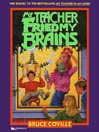
My Teacher Fried My Brains


Title: My Teacher Fried My Brains
Author: Bruce Coville
Illustrator: John Pierard
Genre: Science Fiction (Chapter Book)

Summary
My Teacher Fried My Brains is the continuation of the book My Teacher is an Alien. This book deals with the aftermath of the exposure that the alien Broxholm had been pretending to be a substitute teacher in the local school and that Peter Thompson had left with the alien. My Teacher Fried My Brains is told in the perspective of a seventh grader at Kennituck Falls, Duncan Dougal. The story begins on the first day of seventh grade for Duncan Dougal, which was most likely the worst day of his life. After pulling the fire alarm, Duncan hides in a dumpster and discovers an alien’s hand, which leads him to believe that there is still another alien posing as someone else at the school. Throughout the remainder of the book Duncan tries to discover which of the four new teachers might be the alien. During this adventure, Duncan participates in an in-class demonstration of static electricity that he comes to believe has made him more intelligent. Since he believes this machine is making him more intelligent, he sneaks into his science classroom after school hours to use it. One day when he is using the machine he discovers an alien creature “Poot” in the classroom refrigerator, which makes him even more suspicious of his science teacher. One day after school when Duncan was having a terrible day, he goes into his home economics teacher Miss Karpou’s classroom to seek advice. During this conversation, Miss Karpou’s begins to pull off her mask and identifies herself as the alien. She freezes Duncan’s body and uses his brain as a means of communication among other aliens in the galaxy who are trying to decide what they want to do with humans. Susan, the hero of the last book tries to save Duncan when Miss Karpou is out of her house, however the two of them do not get out of the house in time. At the end of the book Duncan, Susan, Peter, Broxhom, and Kreeblim(Miss Karpou) work together to decide what they will do with the humans. The aliens give Duncan, Susan, and Peter one month to convince the rulers of the galaxy not to wipe out the human race.

Classroom Connection
My Teacher Fried My Brains would be a good book to read aloud to the class because it is interesting and fun to read. Reading this book to the whole class would allow time for discussion about different topics that the books brings up, such as bullying, the first day of school, friendships, and characteristics of science fiction. Since the book is broken down into chapters, the teacher could end at a suspenseful moment, which would spark the interests of the students and would make them excited about reading together the next day.